
Salt-Free Conditioners
A quick call first, no obligation
What it does, and what it doesn't
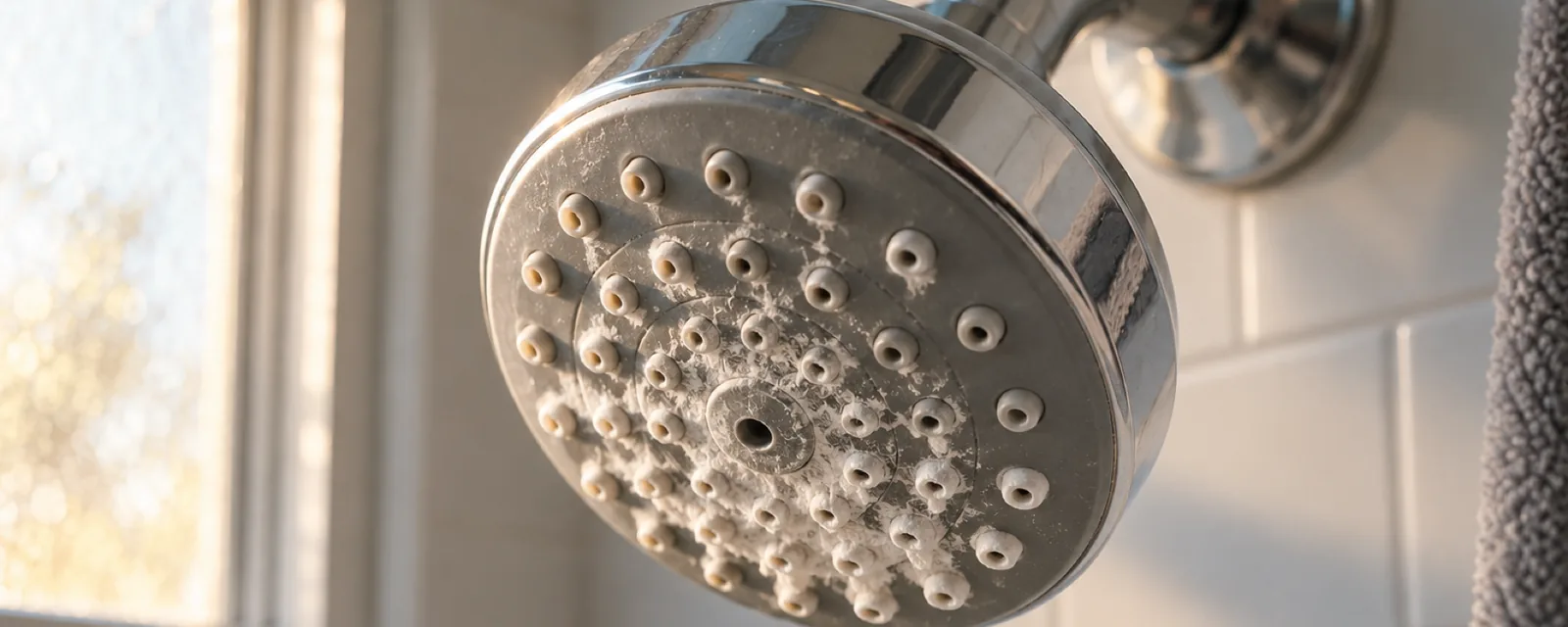
- Less scale buildup on fixtures and inside pipes
- No salt to buy, load, or maintain
- No wastewater from a regeneration cycle
- A lower-maintenance option for renters or small households
What it doesn't do
- Does not soften water. Hardness minerals stay in, so you won't get the same soft-water feel
- Doesn't remove chlorine, chloramine, or other taste and odor issues
- Doesn't prevent scale on major appliances as completely as a softener does
How it works
It goes on your main line
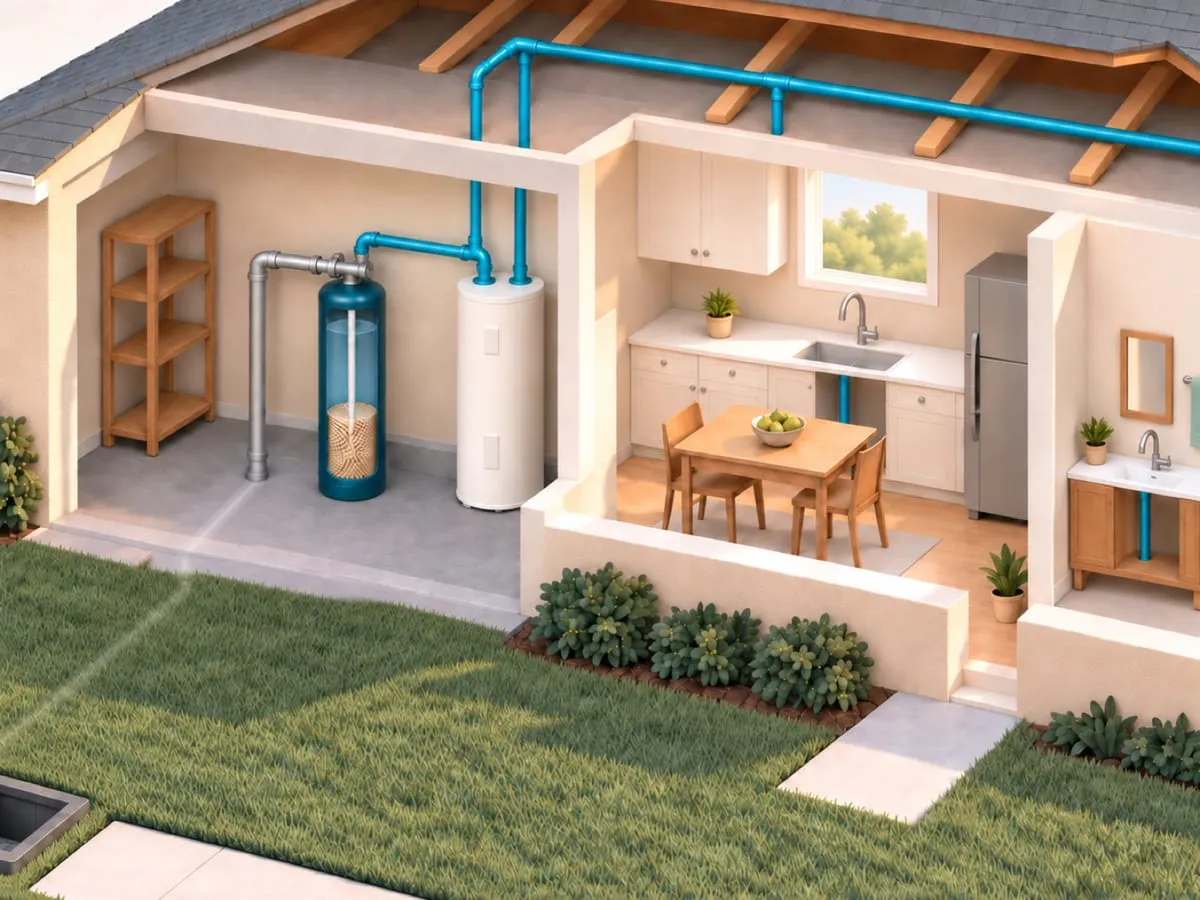
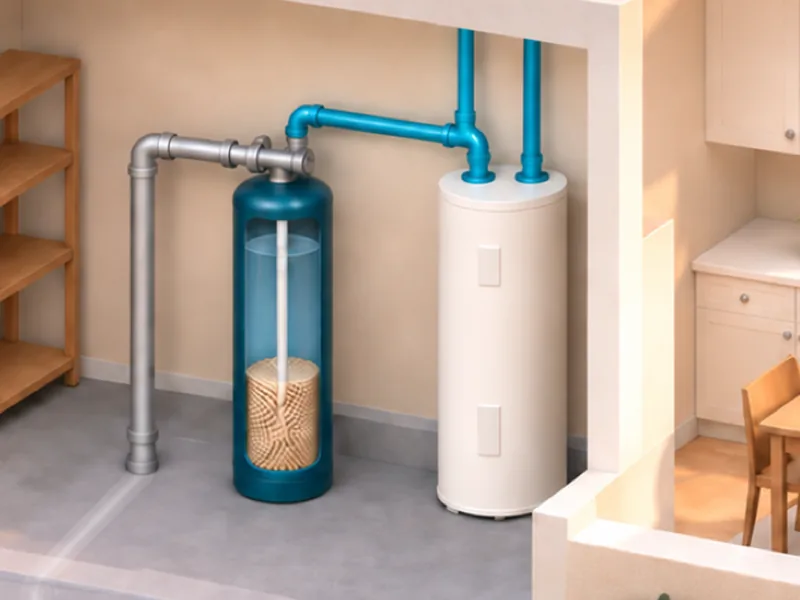
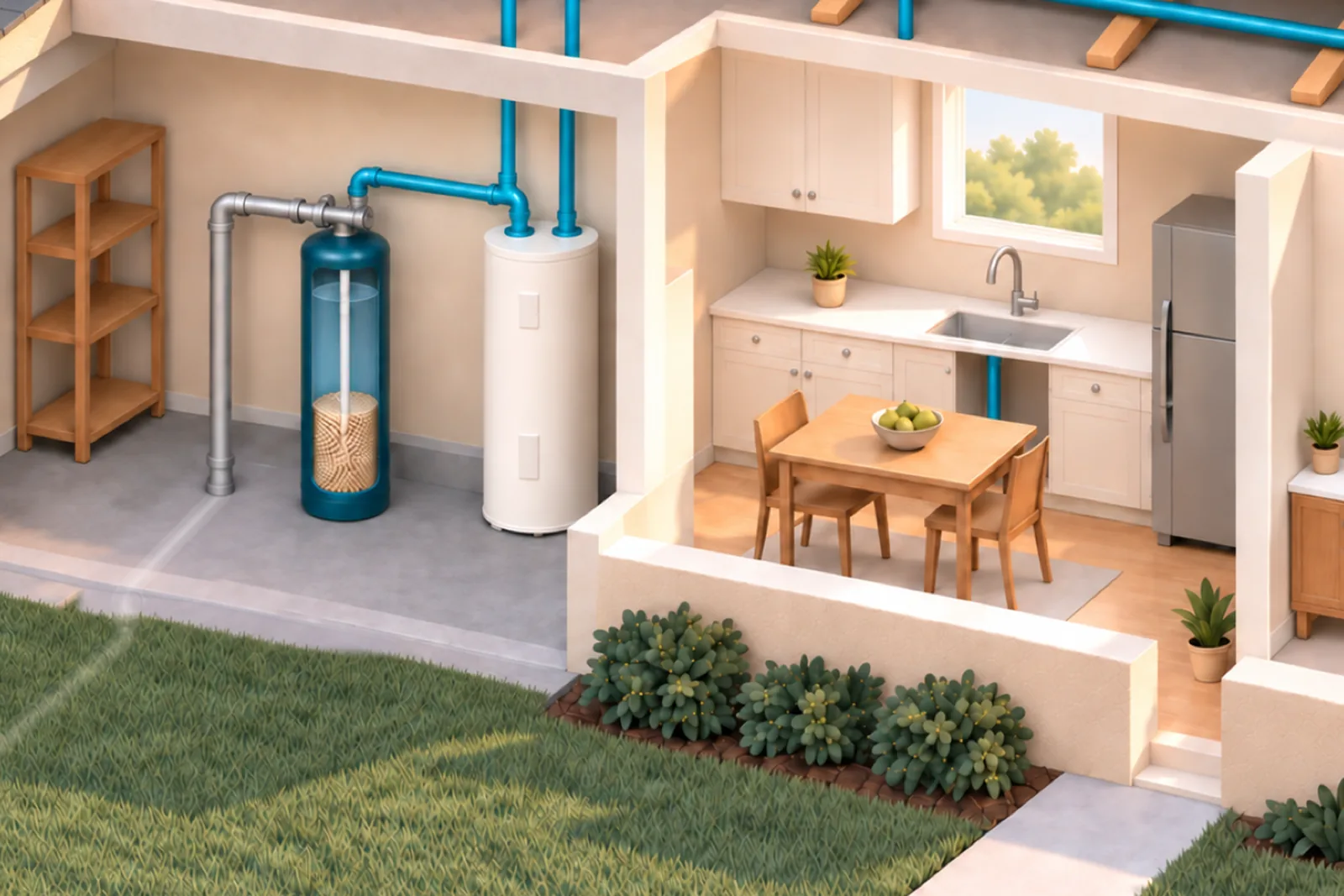
It goes on your main line, usually in the garage. There's no regeneration cycle, so it uses no salt, draws no power and sends nothing to the drain.
Water flows through a treatment tank
TAC (template-assisted crystallization) media turns dissolved HardnessDissolved calcium and magnesium, measured in grains per gallon (gpg). It leaves spots and scale.Read our guide: Understanding Tampa Bay water minerals into microscopic crystals as water flows through.
The crystals flow along with the water
The crystals no longer bond to surfaces, so they ride along with the water instead of forming scale.
Is it right for you?
It's a good fit if
- You want less scale buildup but don't want salt or a soft, slippery feel
- You're on a septic system or want to avoid regeneration wastewater
- Your water is moderately hard, not extreme
It may not be the right fit if
- You want spots and scale gone completely. A softener is the more complete answer
- You have very hard water or well water. Conditioners work best on moderate hardness
- You want less soap and shampoo residue. That comes from true softening
Not every home's water is the same, so we must test your water to give you the right solution.
What happens after you reach out
You request a call
We call you to hear about your water
We test your water in your home
You get a written quote
You decide, with no obligation to buy
What a salt-free conditioner costs
Priced after your water test
Your questions, answered
Does a conditioner really work, or is it a gimmick?
It changes how hardness minerals behave rather than removing them, so less scale forms.
It's tested for scale reduction, not softening: the IAPMO/ANSI Z601 test compares scale buildup with an untreated control.
We confirm which standard, if any, your model carries before you buy.
Will it stop spots on my shower door?
Not reliably. Spots are the minerals left behind when water dries, and a conditioner leaves the minerals in. If spots are your main complaint, a softener is the better fit.
Why would I choose this over a softener?
Some homeowners want less maintenance, no salt and no regeneration wastewater, and are fine keeping hardness minerals in their water. We walk through both at your free test.
Can I switch to a softener later?
Yes. We can swap systems, and a retest shows exactly what's changed.
Softener or conditioner? Your test results will tell you
We'll walk you through both options at your free test.
A quick call first, no obligation