
Reverse Osmosis
A quick call first, no obligation
What it does, and what it doesn't
- Better-tasting drinking and cooking water at your kitchen sink
- Lowers dissolved solids (TDS), the minerals and salts you can't see
- Lowers the sodium a water softener adds, at the faucet you drink from
- Reduces certain contaminants, only those a model is certified for
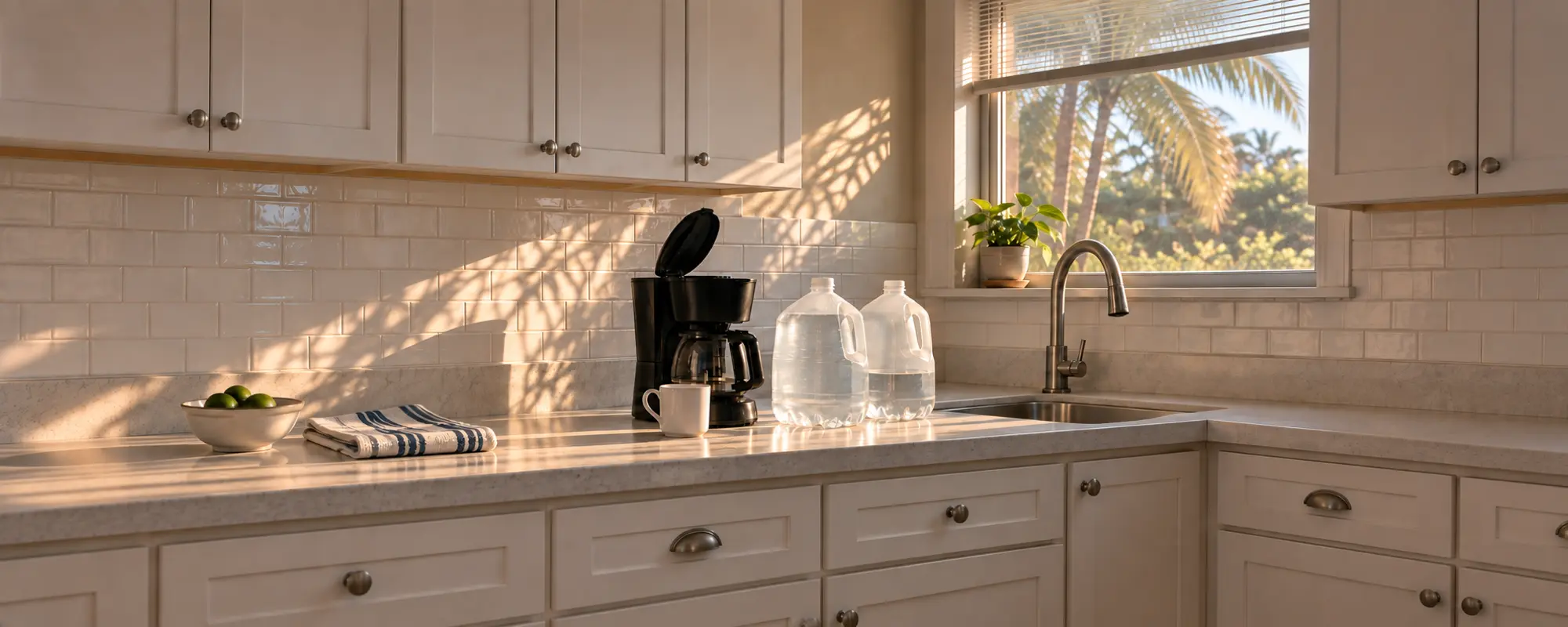
- Fewer cases of bottled water to buy
What it doesn't do
- Treats one faucet only, not the whole house
- Sends some water down the drain as it rinses the membrane
- Doesn't soften the water for the rest of your home, or fix whole-home taste and smell
Reverse osmosis is one of the most thorough filters for a kitchen tap. It lowers dissolved solids (TDS) and sodium. Reverse osmosis is one of the methods NSF/ANSI 58 certifies for reducing contaminants like lead, arsenic and nitrate. Each model is tested for its own list, so before you buy we show you the certified list for the exact model we'd install.
How it works
Filters catch the bigger particles first
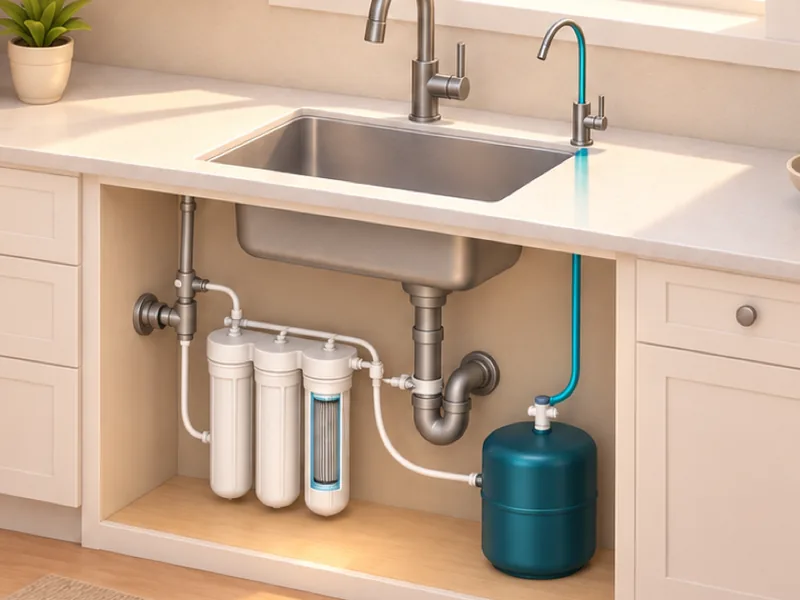
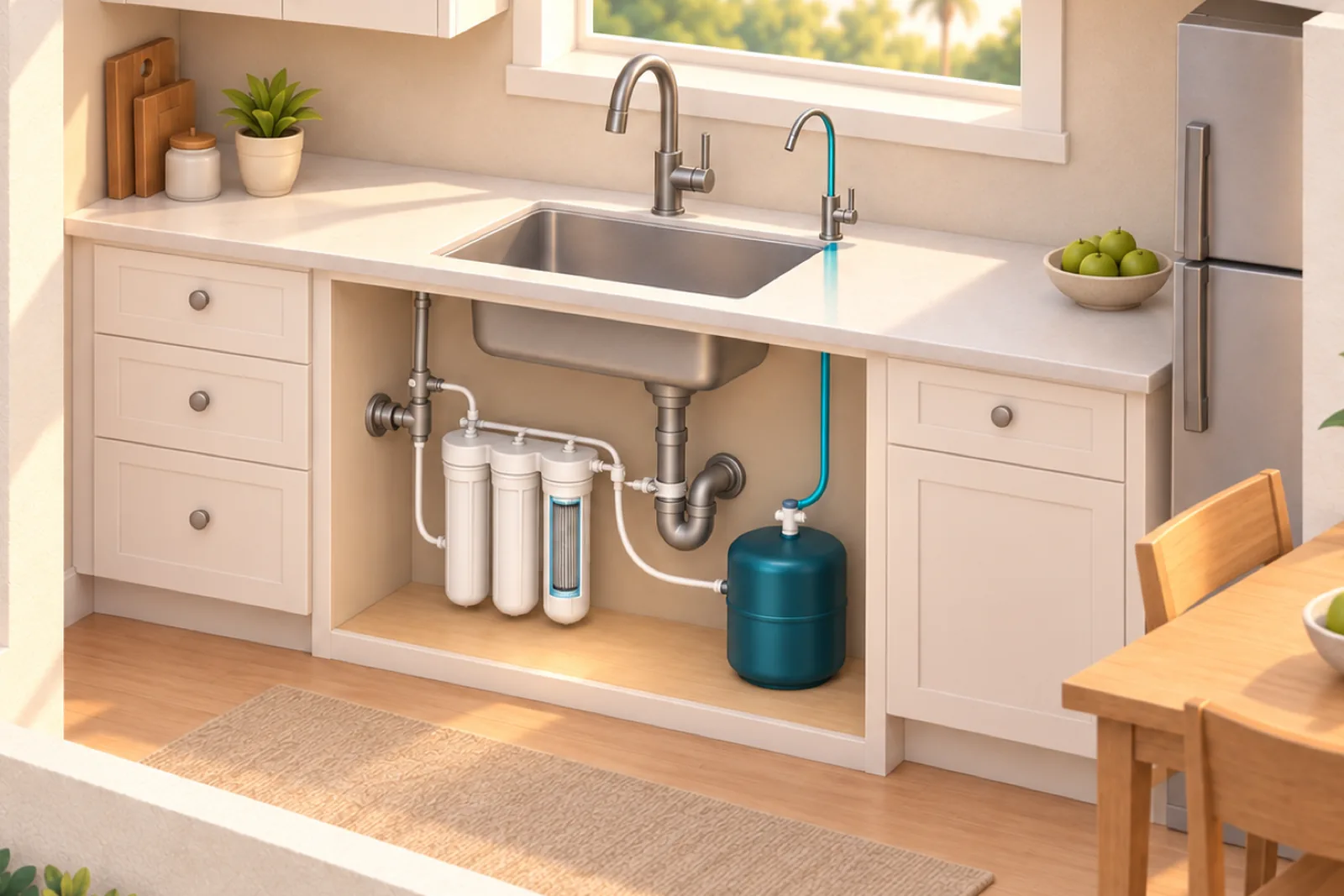
Sediment and carbon pre-filters take out grit and the chlorine or chloramine your utility adds, which protects the membrane.
A very fine membrane does the rest
Water pressure pushes water through a membrane so fine that most dissolved minerals and salts can't pass. What's held back is rinsed down the drain.
Clean water at its own faucet
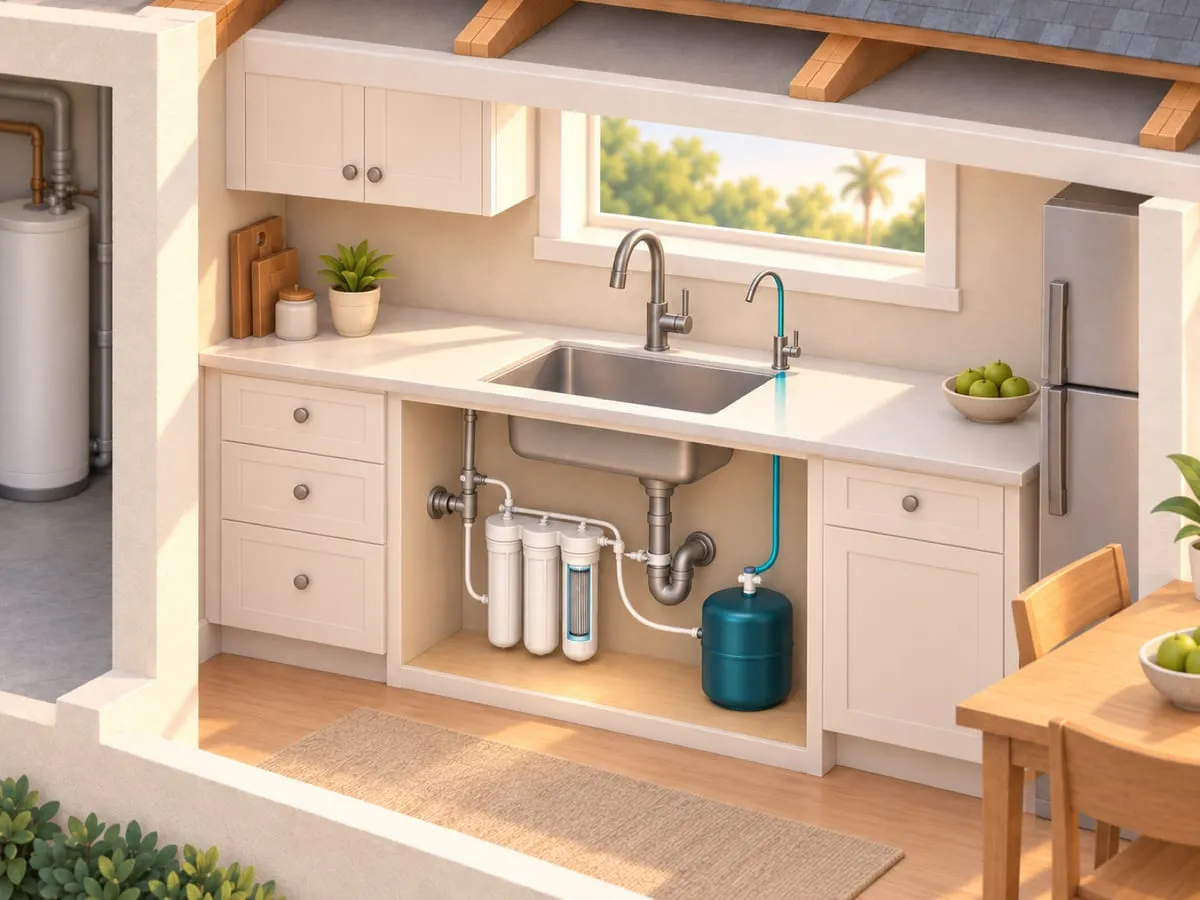
With a tank system, filtered water collects in a small tank under the sink. A tankless system has no tank: a small pump makes water as you pour, so it needs an outlet under the sink. Both use their own faucet on your counter.
Is it right for you?
It's a good fit if
- You want the best-tasting water at your kitchen sink for drinking and cooking
- You want to lower dissolved solids in your tap water
- You want a certified claim, not a guess. We name the exact certified model before you buy
It may not be the right fit if
- You want treated water at every tap. Pair RO with whole-home filtration
- You want to avoid any wastewater from filtration
- Your main concern is hardness, not taste or contaminants. Start with a softener
Not every home's water is the same, so we must test your water to give you the right solution.
What happens after you reach out
You request a call
We call you to hear about your water
We test your water in your home
You get a written quote
You decide, with no obligation to buy
What reverse osmosis costs
Priced after your water test
Your questions, answered
Does reverse osmosis remove PFAS?
Only some RO models are certified for PFAS reduction, and each certification lists the compounds it covers. We show you the certified list for the exact model we'd install before you buy.
Does RO remove fluoride?
Florida stopped adding fluoride to public water in July 2025, so it isn't a reason to choose RO here. RO suits taste, dissolved solids and certified contaminant reduction.
How much water does it waste?
RO systems use some extra water to flush the membrane. We talk through efficient models at your free test if that matters to you.
Where does it go?
Under your kitchen sink, with its own small faucet on the counter. It doesn't treat the rest of the house; for that, pair it with whole-home filtration.
Want better water at your kitchen sink?
We test the water where you drink it, then help you decide whether reverse osmosis is the right fit.
A quick call first, no obligation