
Advanced Whole-Home Filtration
A quick call first, no obligation

What it does, and what it doesn't
- Chlorine or chloramine taste and smell at every faucet and shower
- Hardness minerals (calcium and magnesium) taken out, so spots, scale and soap scum stop building up
- Soap and shampoo that lather and rinse clean
- Less scale inside your water heater and appliances
- Grit and cloudiness caught by a sediment filter before the tank
What it doesn't do
- Doesn't treat bacteria or viruses
- Doesn't remove dissolved solids the way reverse osmosis does
- Doesn't fix iron, sulfur or a rotten-egg smell from a well on its own
- Adds a small amount of sodium as it softens
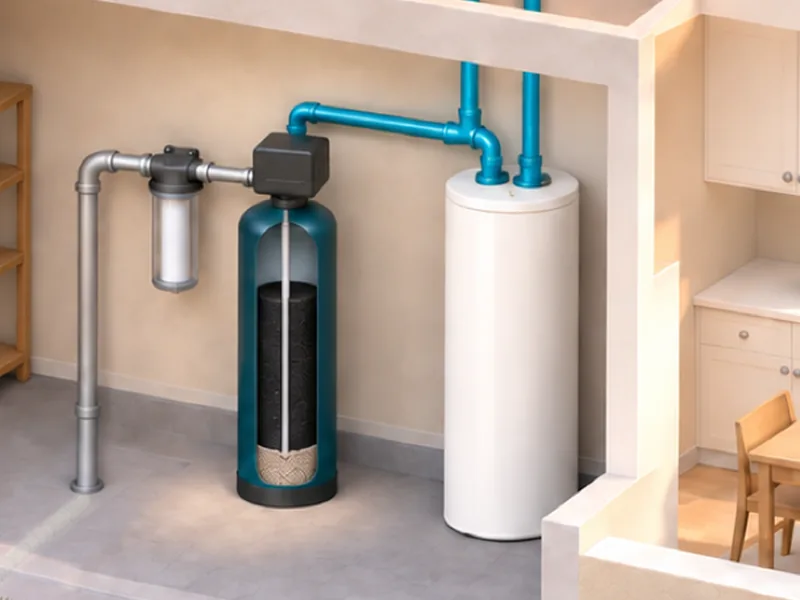
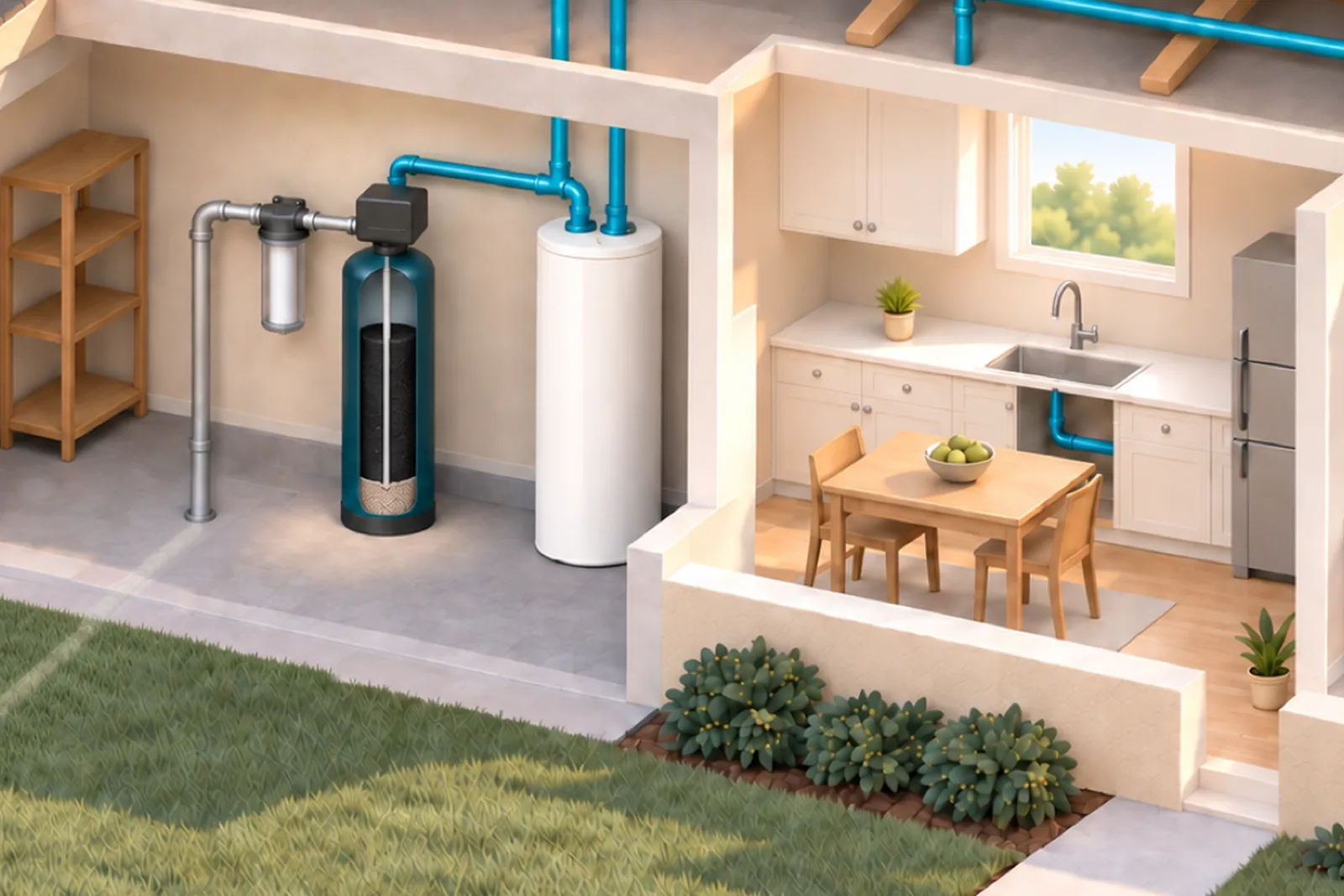
Inside the Softener Plus Carbon tank: catalytic carbon is specially treated carbon made to reduce chlorine and chloramine, the disinfectants your utility adds, which ordinary carbon handles poorly. The softener's resin takes out calcium and magnesium, the hardness minerals that cause spots and scale. The tank regenerates itself automatically, so you only keep the salt topped up.
How it works
A sediment filter catches grit first
If your water carries sand or grit, a sediment filter catches it before it reaches the tank.
The Softener Plus Carbon tank does two jobs
Water flows through catalytic carbon, which is made to reduce chlorine and chloramine. Then it flows through the softener's resin, which swaps hardness minerals for a small amount of sodium. The tank regenerates automatically.
Treated water goes to every tap
From the top of the tank, the water line carries soft, filtered water to your water heater, your showers and every faucet.
Is it right for you?
It's a good fit if
- Your water leaves spots on glass, crust on faucets or scale in your water heater
- Soap and shampoo don't lather well, or rinse off slowly
- You smell chlorine or chloramine at the sink or in the shower
- You want both fixed with one system, at every tap in the house
- You're on city water. Most Tampa Bay utilities use chloramine, which ordinary carbon handles poorly
It may not be the right fit if
- You'd rather not use salt. A salt-free conditioner reduces scale but doesn't soften
- You only want better drinking water at the kitchen sink. Reverse osmosis there may be all you need
- Your well water has iron, sulfur or a rotten-egg smell. Those need their own filter first. See well water
- You're looking for bacteria treatment. Neither a softener nor carbon does that; a UV lamp does
- You're looking to reduce specific contaminants. That's a job for a certified reverse osmosis system at the tap
- You already have a softener that works. You may only need the catalytic carbon filter
Not every home's water is the same, so we must test your water to give you the right solution.
What happens after you reach out
You request a call
We call you to hear about your water
We test your water in your home
You get a written quote
You decide, with no obligation to buy
What whole-home filtration costs
Price for the whole package
From$2,995installed
(Some restrictions apply. Call for details.)
Your questions, answered
Why is the chloramine smell hard to get rid of?
Chloramine is harder to remove than chlorine, and many Tampa Bay utilities use it.
Others use chlorine, including Hernando County, Brooksville, Plant City, Oldsmar, Dunedin, Tarpon Springs, Temple Terrace, Venice and the City of Sarasota.
Catalytic carbon is made to reduce chloramine, which ordinary carbon handles poorly.
Source: Pinellas County water FAQs (opens in a new tab) and each utility's annual water quality report.
Will this soften my water too?
Yes. The softener part takes out the hardness minerals, and the catalytic carbon part handles taste and smell.
How does it clean itself?
It regenerates automatically. On a cycle set for your home, usually overnight, the valve on top flushes the tank clean and recharges the softener with salt. You just keep the salt topped up.
Does the carbon ever need replacing?
Not on a schedule. The carbon is flushed clean each time the system regenerates. Over the years it slowly wears out, and how long that takes depends on how much water you use and on your utility's disinfectant. If the chlorine taste or smell comes back, call us and we'll check it.
Does this affect my water pressure?
A properly sized system shouldn't cause a noticeable drop. We size the system to your home's water use.
Chlorine or chloramine at your tap?
We need to test your water to give you the right solution. The free test checks hardness and which disinfectant your utility uses, and we recommend the system to match.
A quick call first, no obligation