
Well Water Solutions
A quick call first, no obligation
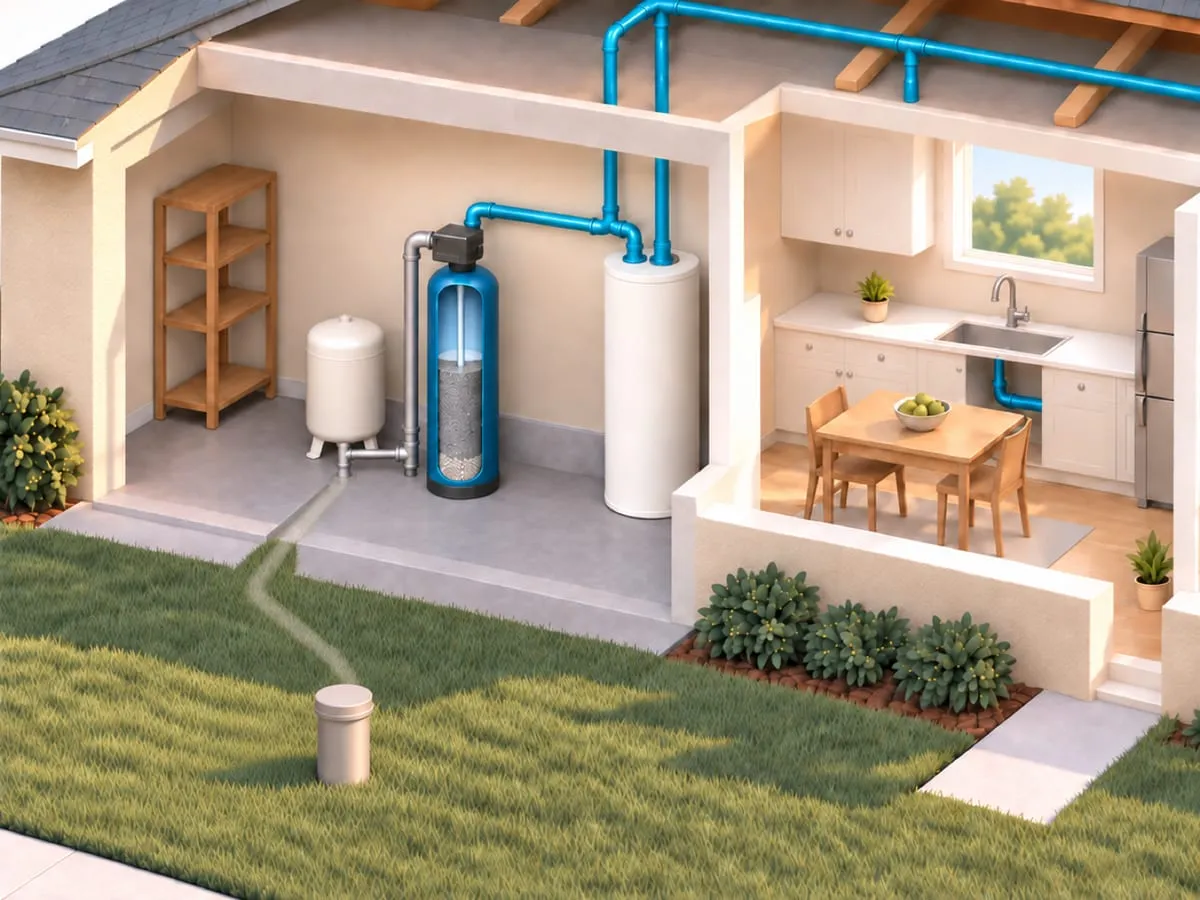
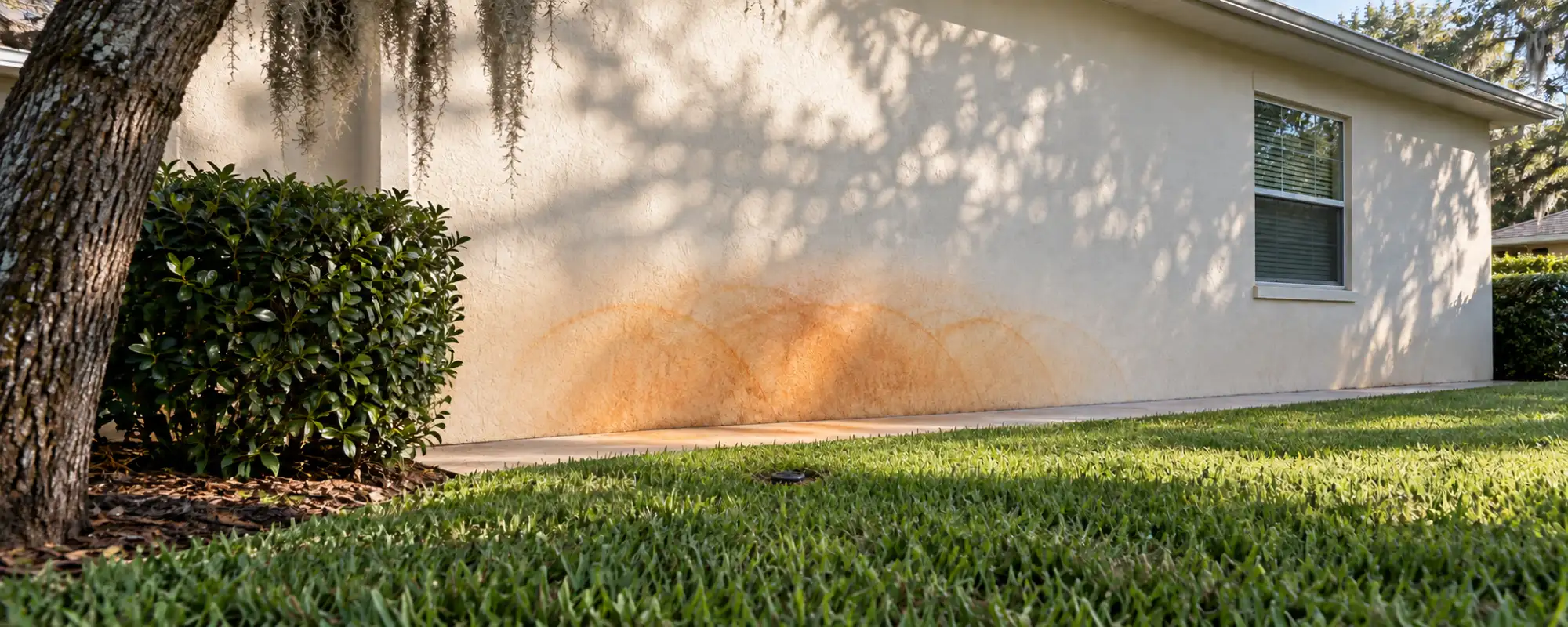
What it does, and what it doesn't
- Rotten-egg (sulfur/hydrogen sulfide) smell
- Orange or rust staining on fixtures and laundry
- Well-water hardness on top of iron or sulfur
- Low or high pH affecting pipes and fixtures
- Cloudy or discolored water after heavy rain or flooding
What it doesn't do
- No single system fixes every well; equipment is sized to what your water actually has
- Doesn't replace the annual well maintenance recommended by the health department
Water Softener + IMS (Iron, Manganese & Sulfur Filter)
For a well with hard water and iron, manganese or a rotten-egg smell.
What it does
- The softener removes calcium and magnesium, which reduces hard-water stains on your appliances
- The iron, manganese and sulfur filter reduces iron, manganese and the sulfur (rotten-egg) smell
- Reduces new orange or rust stains on fixtures and laundry
What it doesn't do
- Doesn't treat bacteria. A certified lab test shows what's in your well
- Doesn't raise low (acidic) pH. If your test shows low pH, we can add a separate neutralizer tank
- Isn't right for every well. If your readings call for different equipment, we'll tell you
How it works
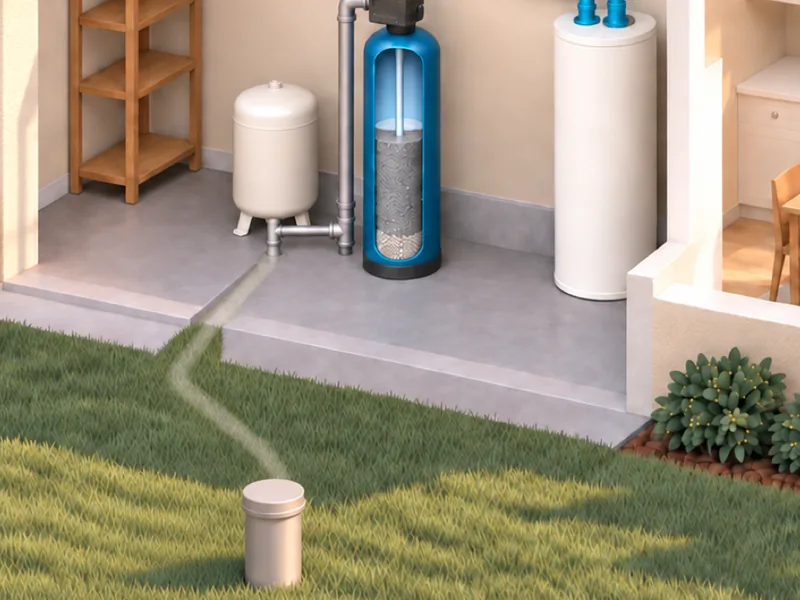
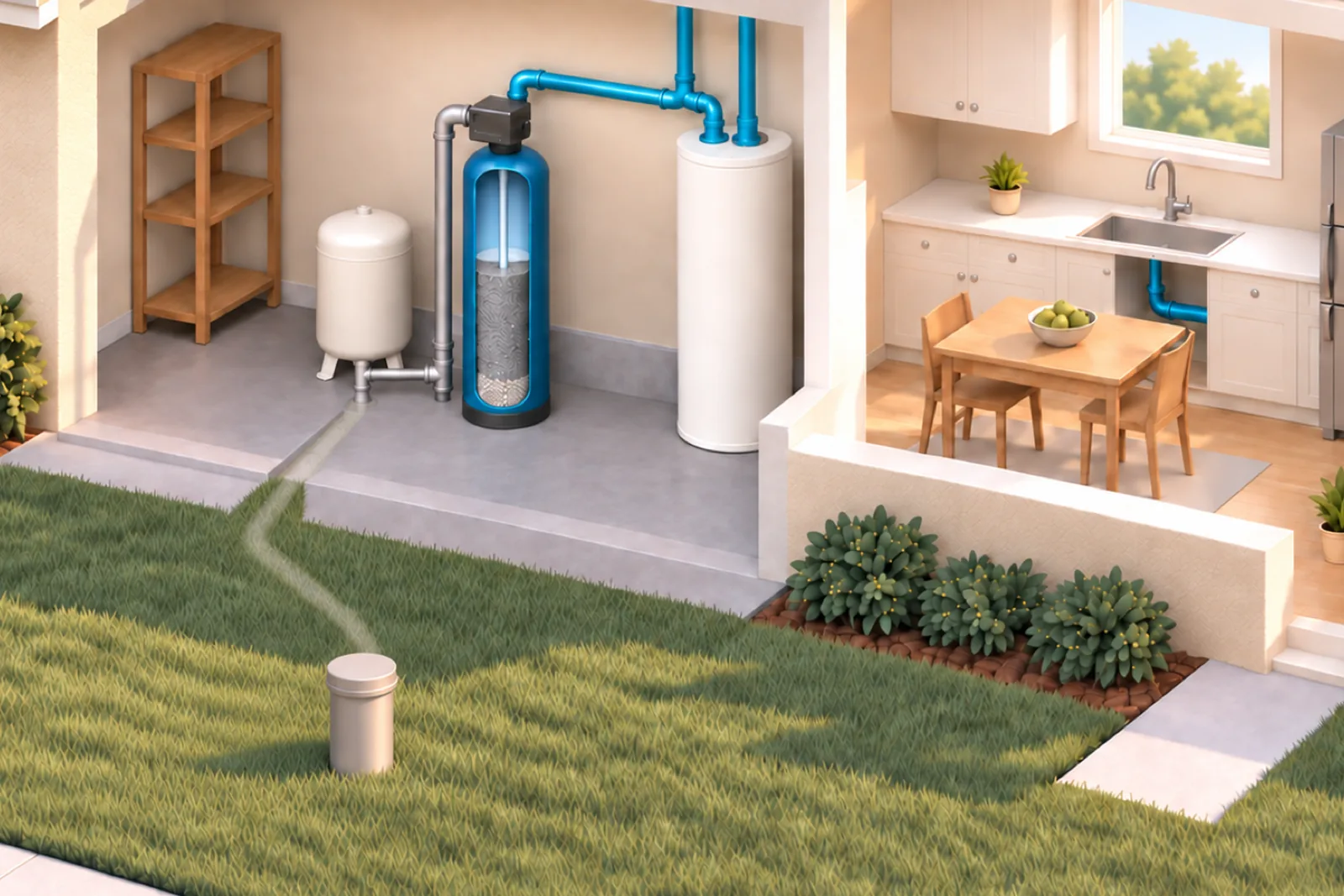
It starts at your wellhead
Water runs from your well to your pressure tank. Your well, pump and pressure tank stay as they are.
Your test readings decide which tanks you need
An iron and sulfur filter, pH correction, a softener: you get only what your readings call for. Each tank is sized to how much water your home uses at once.
Treated water reaches every tap
The tanks go on the line between your pressure tank and your water heater, usually in the garage. Iron, sulfur and pH treatment come first, then the softener. A UV lamp, if you add one, goes last, where the water is clearest.
Is it right for you?
It's a good fit if
- You're on a private well in Pasco, eastern Hillsborough, or anywhere in our service area
- You notice a sulfur smell, staining, or scale and want it diagnosed properly
- Your wellhead was recently flooded and you want to retest and treat
It may not be the right fit if
- You're on city water. A well system won't apply; see our softener and filter pages instead
- You want a fixed price before testing. Well systems are priced after we test
What happens after you reach out
You request a call
We call you to hear about your water
We test your water in your home
You get a written quote
You decide, with no obligation to buy
What a well water system costs
Priced after your water test
Your questions, answered
Why isn't there a set price for well systems?
Every well is different. Iron, sulfur, pH and hardness vary house to house, so we quote well systems after testing, not before.
My well was flooded during a storm. What should I do?
Start with the Florida Department of Health's published guidance for private wells after a flood. It covers what to do before you use the water again. Once you've followed it, we can measure iron, sulfur, pH and hardness in your home and size treatment to those numbers.
What does the free test measure at a well?
Iron, sulfur, pH and hardness, in your home. We show you each reading and what it means for equipment.
Find out what your well water measures
We measure iron, sulfur, pH and hardness in your home during the free test.
A quick call first, no obligation